Supplements for Systemic Nickel Allergy: What's Safe, What's Dangerous, and What Actually Helps
Supplements for Systemic Nickel Allergy: What's Safe, What's Dangerous, and What Actually Helps
If you're on a low nickel diet, you probably know you need supplements to fill the nutritional gaps left by eliminating whole grains, legumes, nuts, and seeds. But here's the problem nobody warns you about: some of your supplements might be making your symptoms worse.
The Hidden Nickel in Your Supplement Bottle
Taking dietary supplements statistically increases the amount of nickel excreted in urine — proving a massive hidden exposure route that most patients don't even know exists (Darsow et al., 2012).
Researchers testing prenatal vitamins found nickel levels ranging from 0.08 to a staggering 34 micrograms per daily dose (Avula et al., 2010). When your entire daily budget on a low nickel diet is 150 mcg, a single contaminated supplement can blow through a significant chunk of your threshold.
And the regulatory situation offers no protection. The international standard (ICH Q3D) allows up to 220 mcg of oral nickel per day in pharmaceuticals — a limit based on general toxicity, not allergic sensitization (Wollein et al., 2015). SNAS patients react far below this "safe" level.
Why SNAS Patients Need Supplements in the First Place
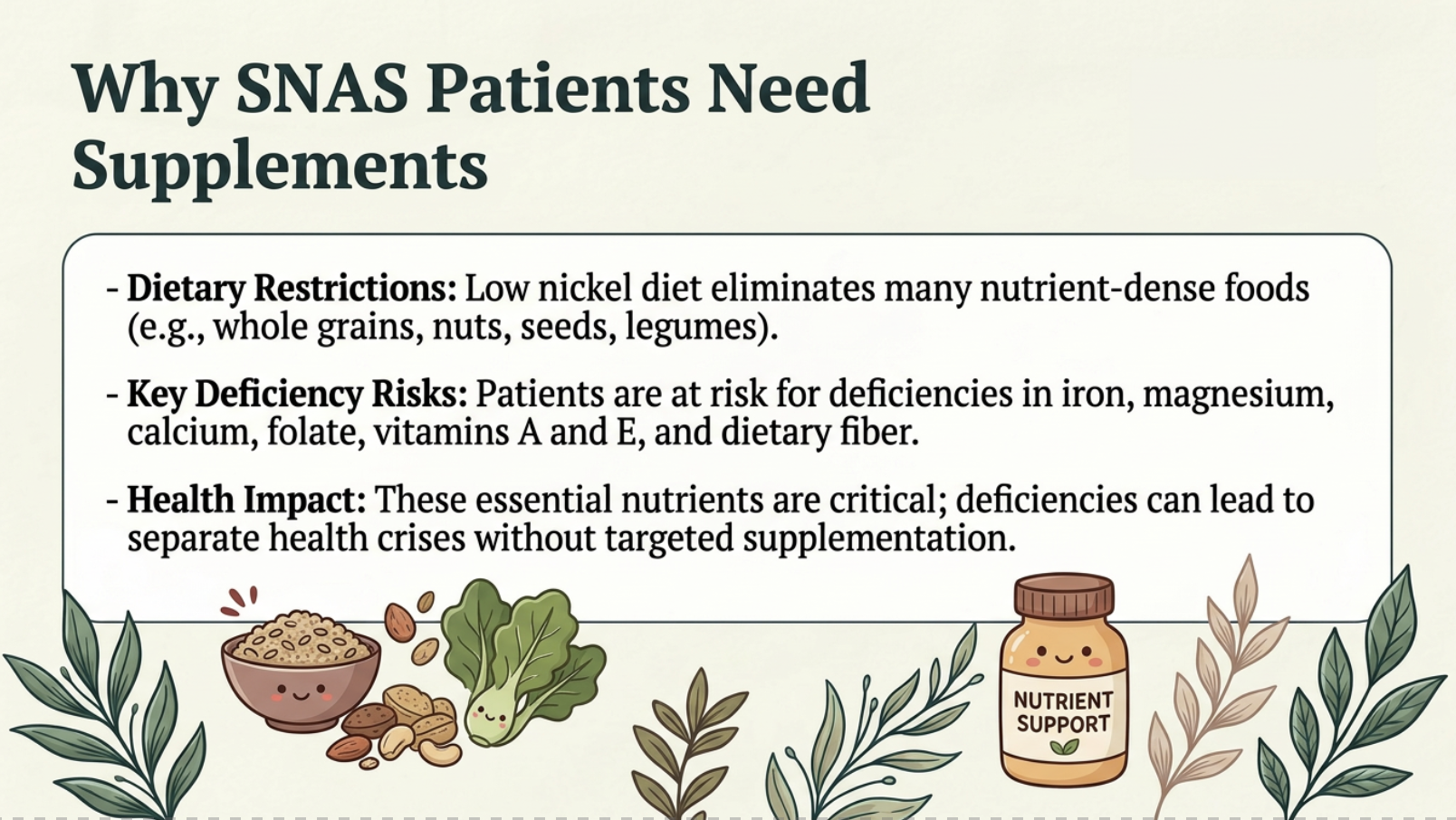
The low nickel diet requires you to reduce or eliminate nutrient-dense foods — whole grains, nuts, seeds, legumes, and leafy greens. This creates real deficiency risks in iron, magnesium, calcium, folate, vitamins A and E, and dietary fiber.
These aren't optional nutrients. Iron deficiency in particular creates a dangerous feedback loop (more on that below). Targeted supplementation matters — but you have to be strategic about it.
Where the Contamination Comes From
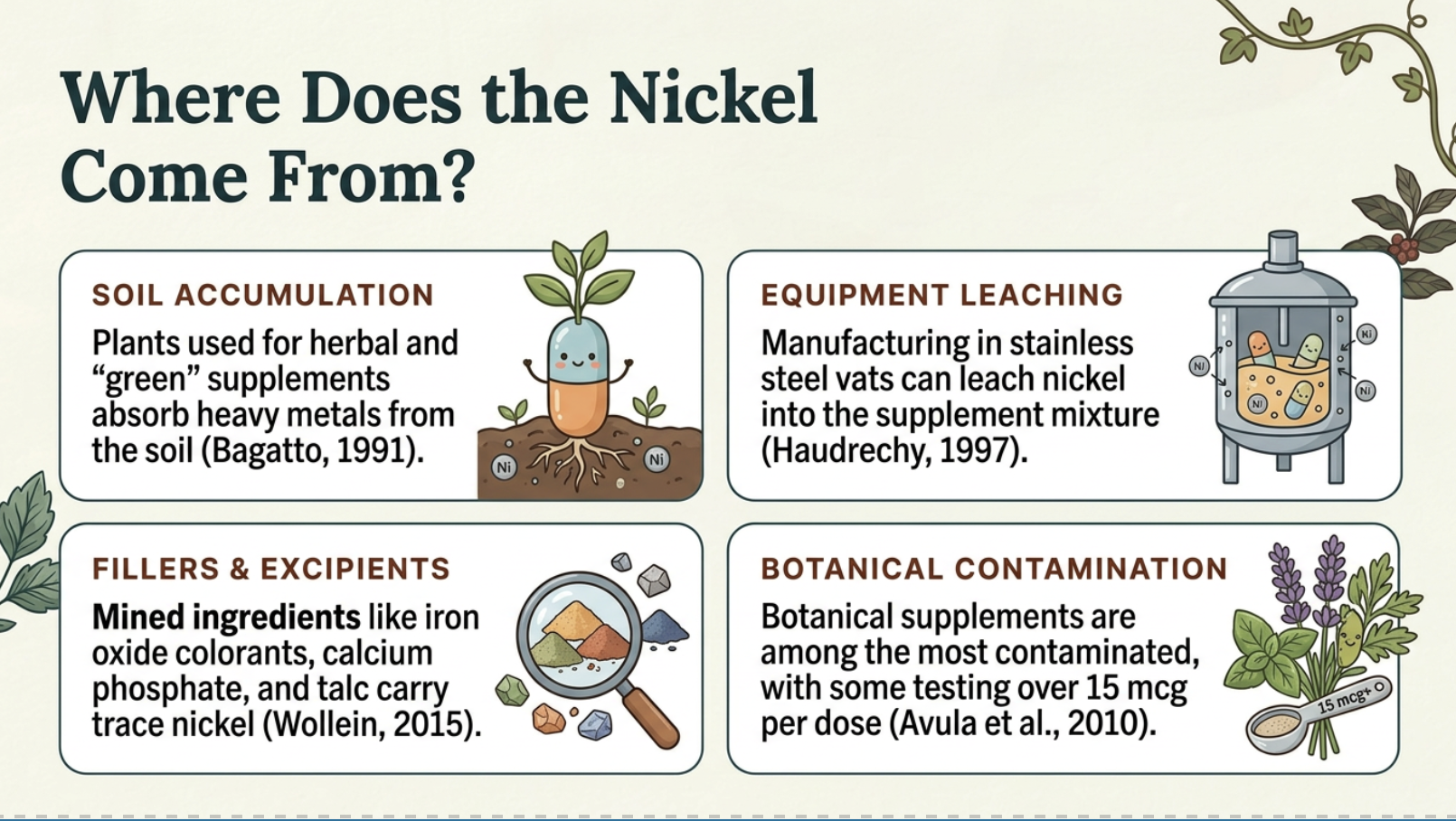
Nickel isn't added to supplements on purpose. It's a hitchhiker:
Soil accumulation: Plants used for herbal and "green" supplements naturally absorb heavy metals from the soil where they're grown. Some botanical supplements test at over 15 mcg of nickel per dose (Avula et al., 2010; Bagatto & Shorthouse, 1991).
Fillers and excipients: Manufacturers use binders and colorants that are mined from the earth — iron oxide colorants (red, yellow, black), dibasic calcium phosphate, and talc — all of which carry trace nickel contamination (Wollein et al., 2015).
Equipment leaching: Processing ingredients in stainless steel vats causes nickel to leach into the supplement mixture during manufacturing (Haudrechy et al., 1997).
The Iron-Nickel Paradox
This is the most frustrating catch-22 in SNAS management, and it deserves its own section.
Iron and nickel compete for the exact same doorway in your intestines — a receptor called Divalent Metal Transporter 1 (DMT1). When you're iron-deficient, your body panics and builds more DMT1 receptors to capture any iron passing by. But those extra doors are wide open for nickel too (Tallkvist et al., 2003; Solomons et al., 1982).
So the more iron-deficient you are, the more nickel you absorb. You desperately need iron to close those doors. But many over-the-counter iron supplements are contaminated with nickel.
That's the paradox. And it's why choosing the right iron form — and working with your doctor to monitor ferritin levels — is absolutely critical for SNAS patients.
6 Targeted Supplements That Can Actually Help
Not all supplementation is risky. Research supports six specific interventions that actively help SNAS patients:
Block Absorption
Vitamin C (The Chelator): 500–1000 mg taken WITH meals. Vitamin C binds to nickel in the digestive tract, forming a complex your body excretes instead of absorbs. It's both a nutritional supplement and a nickel-blocking tool (Zirwas & Molenda, 2009; Solomons et al., 1982).
Iron (The Competitor): Treat any underlying deficiency with clean, pharmaceutical-grade iron. Repleting iron stores downregulates DMT1 transporters, physically closing the doors to nickel absorption (Tallkvist et al., 2003; Sharma, 2011).
Vitamin A (The Antioxidant): Monitored supplementation below 10,000 IU/day. Studies show that 6 weeks of supplementation significantly lowers systemic serum nickel levels while supporting mucosal healing (Patlar et al., 2011).
Repair the Barrier
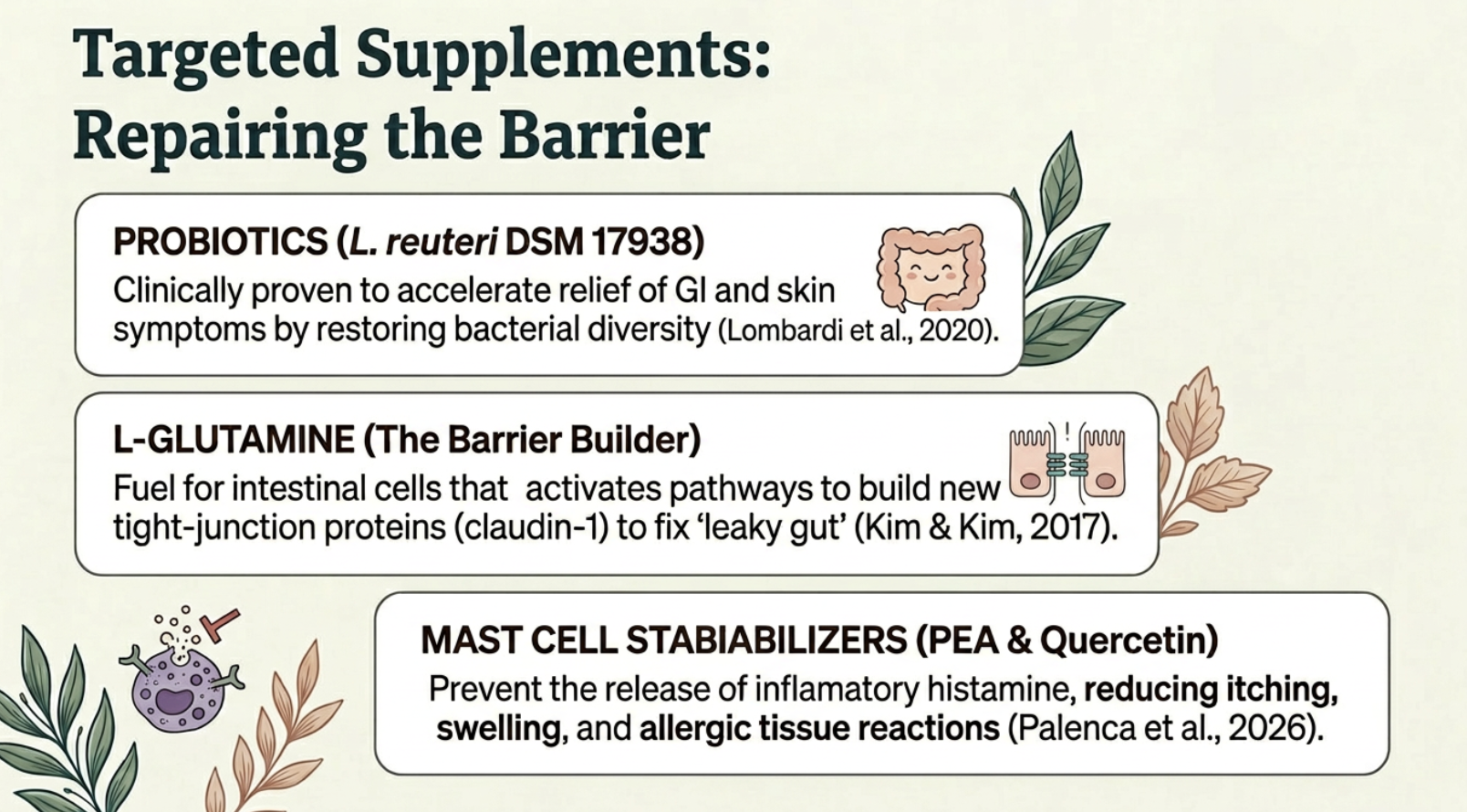
Probiotics — L. reuteri (DSM 17938): Clinical trials show this specific strain significantly improves both skin and GI symptoms in SNAS patients when combined with a low nickel diet, by restoring healthy bacterial diversity (Lombardi et al., 2020; Randazzo et al., 2015).
L-Glutamine (The Barrier Builder): The primary fuel for intestinal cells. L-Glutamine activates cellular pathways to build new tight-junction proteins (claudin-1), directly repairing the "leaky gut" caused by nickel damage (Kim & Kim, 2017).
Mast Cell Stabilizers — PEA & Quercetin: These compounds stop mast cells from releasing inflammatory histamine, acting as a "gatekeeper" that reduces tissue swelling, allergic itching, and the creation of new inflammatory blood vessels (Palenca et al., 2026).
How to Choose Safer Supplements
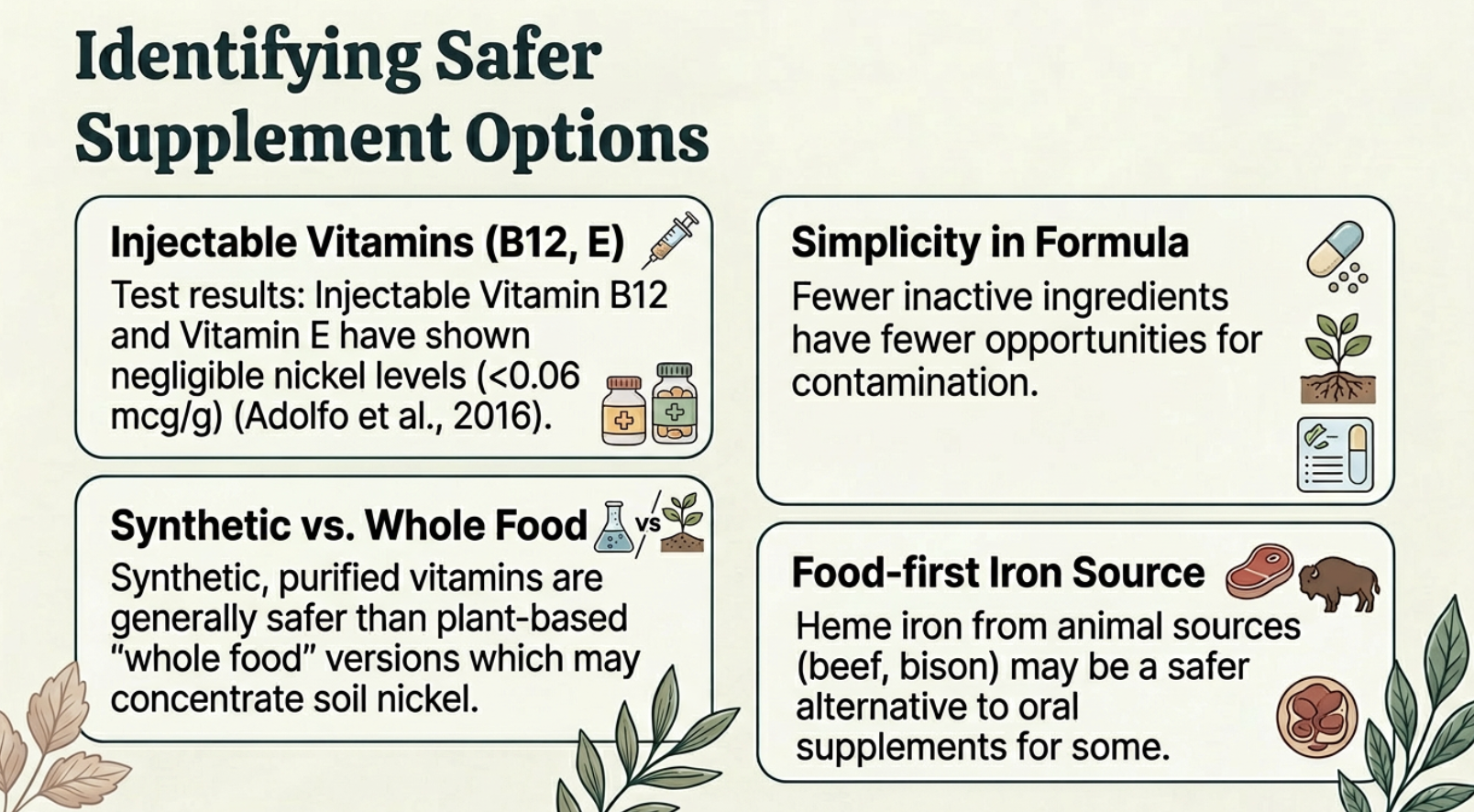
Audit your fillers. Turn the bottle around and read the "Other Ingredients" list. Avoid supplements colored with iron oxides (red, yellow, or black) and avoid fillers like talc or calcium phosphate. Look for brands with the absolute minimum number of inactive ingredients.
Synthetic may be safer than "natural." Counter-intuitive, but purified synthetic vitamins have fewer opportunities for metal contamination than plant-based "whole food" supplements. Injectable Vitamin B12 and Vitamin E, for example, tested at negligible nickel levels — less than 0.06 mcg/g (Adolfo et al., 2016).
Avoid "whole food" and "green" supplements. A scoop of concentrated kale, spirulina, or super-greens powder is basically a concentrated scoop of soil-derived heavy metals.
The one-at-a-time rule. When adding supplements back into a low nickel diet, never start multiple new products at once. Introduce one at a time and monitor for 3 to 5 days. If you flare, you know exactly which product caused it.
Common Myths
"Natural, organic, plant-based supplements are safer." Organic certification doesn't test for nickel. Plants absorb nickel from soil regardless of farming practices. "Whole food" supplements concentrate it.
"My doctor said take iron, so I'll grab what's on the shelf." Standard oral iron supplements are frequently contaminated. Cheap iron pills often make SNAS symptoms worse. You need a pure, pharmaceutical-grade form — and you need your ferritin monitored.
"FDA regulations protect me from heavy metals." Regulatory limits are designed to prevent acute toxicity in the general population. They are not designed for the micro-level thresholds required to prevent an allergic response in sensitized patients.
Your Next Step
The low nickel diet is the foundation — supplements are the second layer. Get the diet right first, then add supplements strategically using the one-at-a-time rule.
Download my free Nickel Food List to get your dietary foundation in place.
Download the Free Nickel Food List →
This is the final post in the Basics of Systemic Nickel Allergy series. If you found it helpful, share it with someone you think might be dealing with undiagnosed nickel allergy.
References
Adolfo FR, et al. Simultaneous determination of cobalt and nickel in vitamin B12 samples using high-resolution continuum source atomic absorption spectrometry. Talanta. 2016;147:241-245.
Avula B, et al. Quantitative determination of multiple elements in botanicals and dietary supplements using ICP-MS. J Agric Food Chem. 2010;58(16):8887-8894.
Bagatto G, Shorthouse JD. Accumulation of copper and nickel in plant tissues and an insect gall of lowbush blueberry, Vaccinium angustifolium, near an ore smelter at Sudbury, Ontario, Canada. Can J Bot. 1991;69(7):1483-1490.
Darsow U, et al. Influence of dietary factors, age and nickel contact dermatitis on nickel excretion. Contact Dermatitis. 2012;67(6):351-358.
Haudrechy P, et al. Nickel release from stainless steels. Contact Dermatitis. 1997;37(3):113-117.
Kim MH, Kim H. The Roles of Glutamine in the Intestine and Its Implication in Intestinal Diseases. Int J Mol Sci. 2017;18(5):1051.
Lombardi F, Fiasca F, Minelli M, et al. The Effects of Low-Nickel Diet Combined with Oral Administration of Selected Probiotics on Patients with Systemic Nickel Allergy Syndrome (SNAS) and Gut Dysbiosis. Nutrients. 2020;12(4):1040.
Mislankar M, Zirwas MJ. Low-nickel diet scoring system for systemic nickel allergy. Dermatitis. 2013;24(4):190-195.
Palenca I, Basili Franzin S, Sarnelli G, Esposito G. Palmitoylethanolamide for Nickel Allergy: Plausible, Untested, and Worth Considering. Biomedicines. 2026;14(1):177.
Patlar S, Boyali E, Baltaci AK, Mogulkoc R. The effect of vitamin A supplementation on various elements in elite taekwondo players. Biol Trace Elem Res. 2011;139(3):296-300.
Randazzo CL, Pino A, Ricciardi L, et al. Probiotic supplementation in systemic nickel allergy syndrome patients: study of its effects on lactic acid bacteria population and on clinical symptoms. J Appl Microbiol. 2015;118(1):202-211.
Sharma AD. Iron therapy in hand eczema: a new approach for management. Indian J Dermatol. 2011;56(3):295.
Solomons NW, Viteri F, Shuler TR, Nielsen FH. Bioavailability of nickel in man: effects of foods and chemically-defined dietary constituents on the absorption of inorganic nickel. J Nutr. 1982;112(1):39-50.
Tallkvist J, Bowlus CL, Lonnerdal B. Effect of iron treatment on nickel absorption and gene expression of the divalent metal transporter (DMT1) by human intestinal Caco-2 cells. Pharmacol Toxicol. 2003;92(3):121-124.
van der Voet GB, et al. Clinical and analytical toxicology of dietary supplements: A case study and a review of the literature. Biol Trace Elem Res. 2008;125(1):1-12.
Wollein U, et al. Potential metal impurities in active pharmaceutical substances and finished medicinal products—A market surveillance study. Eur J Pharm Sci. 2015;77:100-105.
Zirwas MJ, Molenda MA. Dietary Nickel as a Cause of Systemic Contact Dermatitis. J Clin Aesthet Dermatol. 2009;2(6):39-43.